
🎁 10 FREE seeds with orders over $420 · Free shipping over $200 · Germination guaranteed
$65.00 – $240.00Price range: $65.00 through $240.00
Durban Poison strain is a pure South African sativa from the port city of Durban, famous for a sweet anise and pine aroma and a clear, energetic effect that many people save for the daytime. It tests 15% to 24% THC, often carries a little THCV, and flowers in a quick 8 to 9 weeks for a sativa, though the plant itself grows tall. It is also a parent of Girl Scout Cookies. Our feminized Durban Poison seeds are already in Canada and ship from Vancouver, BC in 3 to 7 business days.

| Pack Size | Price | Quantity | |
|---|---|---|---|
| 5 Seeds | $65.00 | ||
| 10 Seeds | $120.00 | ||
| 25 Seeds | $240.00 |
Viability-tested seeds. If they don’t pop following our germination guide, we replace them.
Encrypted SSL checkout. Your card statement shows a neutral company name, never cannabis.
Ships from Vancouver, BC in 3 to 7 days, plain packaging with no cannabis branding.
Live chat 7 days a week, plus growing guides written for Canadian climates.
| Genetics | South African landrace sativa from the Durban region of KwaZulu-Natal, selected for an earlier finish |
|---|---|
| Type | Sativa (landrace; feminized lines are about 90/10 to pure sativa) |
| THC | 15%–24% |
| CBD | Under 1%; THCV often present in small amounts |
| Flowering time | 8–9 weeks (56 to 65 days) |
| Outdoor harvest | Late September to early October |
| Height indoor / outdoor | 100–180 cm / 200–300 cm |
| Yield indoor / outdoor | 400–550 g/m² / 500–800 g per plant |
| Difficulty | Easy to moderate |
| Climate | Warm and sunny; tolerates dry spells; give it headroom and airflow |
| Best for | Daytime use, anise and pine flavour, extraction, a classic landrace grow |
Durban Poison Feminized at a glance: Durban Poison is a South African landrace sativa that flowers in 8 to 9 weeks, tests 15% to 24% THC, grows 100 to 180 cm indoors and yields 400 to 550 g/m² of chunky, resin-coated buds that smell of liquorice, sweet pine and lemon peel.
Durban sits on the warm Indian Ocean coast of South Africa; our seed bank sits on the cooler Pacific coast of British Columbia, and that is where your Durban Poison seeds wait. They go out from Vancouver by domestic mail in a plain envelope, so a grower in Regina, Guelph, Rimouski or Halifax has the pack in 3 to 7 business days, with no customs form and no overseas delay. Every lot is checked for viability before it is shelved and covered by our 80% germination guarantee, and the 10 and 25 seed packs are buy one get one free.
Durban Poison strain is a landrace: a plant that grew for generations around Durban, in the KwaZulu-Natal region of South Africa, long before anyone bred it on purpose. Local farmers grew tall, narrow sativas suited to the hot, humid coast, and seed from that region reached California in the 1970s. A later selection in the Netherlands kept the plants that finished earliest and carried the most resin, and that faster, more uniform version is the Durban Poison most growers know today.
The name joins the home city with old slang, where calling a strain poison was a compliment to its strength. An earlier version of this page listed the parents as unknown; there are none to list, because Durban Poison is the starting point rather than a cross. It has since become an ancestor of some of the most famous modern strains, most notably Girl Scout Cookies, which comes from OG Kush and a Durban Poison cut, and Cherry Pie, which pairs Durban with Granddaddy Purple.
Durban Poison is the sativa people mean when they say they want a clear head. The effect lifts quickly into an alert, upbeat mood with sharp focus and plenty of energy, which is why it has picked up the nickname espresso of cannabis. Many people use it for a hike, a creative task, housework or a social afternoon, and the body stays light throughout, with little of the heaviness that most modern hybrids bring.
THC usually runs from 15% to 24%. Some batches also show small amounts of THCV, a cannabinoid often discussed alongside landrace sativas, though levels vary from plant to plant. A large dose can feel racy or jittery for people sensitive to strong sativas, so start with one or two puffs, and keep it to the first half of the day if you want to sleep at a normal hour. Dry mouth is the most common complaint.
The smell is easy to pick out of a lineup: sweet anise and black liquorice first, then fresh pine, a squeeze of lemon peel and a light herbal spice. The smoke is smooth and sweet with that liquorice note running from inhale to exhale and an earthy, slightly peppery finish. Terpinolene usually leads the terpene profile, which explains the fresh, piney sweetness, with myrcene, ocimene and pinene behind it.
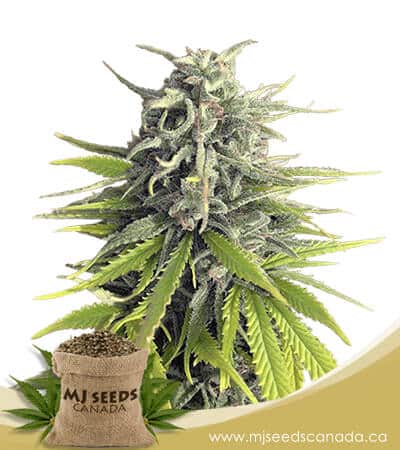
For a sativa, the buds are unusually chunky and round, light to olive green with orange pistils. The trichome heads are oversized and coat sugar leaves and even the fan leaves, which is why Durban Poison has long been a favourite for hash and other extracts.
Durban Poison is simpler to grow than most sativas, but it needs room. It stretches two to three times after the flip, so veg for only two to three weeks and switch to 12/12 at 30 to 40 cm if your tent is under two metres tall. Keep day temperatures at 22 to 27 degrees and humidity at 40% to 50% in flower. It is a lighter feeder than an indica of the same size: run nutrients at moderate strength, ease off nitrogen early in bloom and watch for burnt tips, a sign the plant wants less. Most plants are ready in 56 to 65 days.
Its 8 to 9 week bloom makes Durban Poison one of the few true sativas that can finish across most of southern Canada. The Okanagan, the Similkameen and the Fraser Valley usually harvest in the last week of September, and southern Ontario and the Montérégie follow in the first week of October. On the coast, Vancouver Island and Lower Mainland gardens finish around the same time; its airy, resinous buds handle damp weather better than dense indica colas. On the Prairies, start seeds indoors in mid April and plant out after the last frost; a sunny, south-facing spot in Saskatchewan or southern Alberta brings it in by late September. In the Maritimes, choose the warmest site you have and expect early October. Our guide to the best outdoor seeds for Canada lists other strains on a similar timetable.
Height is the main thing to manage. Top at the fourth node, then tie the new tops outward and run a screen of green net so the stretch fills the screen instead of the ceiling. Supercropping the tallest branches in the second week of flower also works well on these flexible stems. Outdoors, a plant in the ground can pass two and a half metres, so stake it before the late summer winds arrive.
Watch the trichomes rather than the calendar from about day 52. For the brightest, most energetic effect, harvest when most heads are cloudy with very little amber; let it run a week longer if you want a softer finish. Dry for 10 to 14 days at about 60% humidity and 17 to 19 degrees. The anise becomes clearer after two to three weeks in the jar.
A screened indoor canopy gives 400 to 550 g/m², a step up from the older figure on this page, which assumed an untrained plant. Outdoors in a full Canadian season, a plant in good soil or a 60 litre or larger container returns 500 to 800 g of dried flower. Save the trim: the oversized trichomes make Durban Poison sugar leaves well worth washing or pressing.
Grow Durban Poison seeds if you want a daytime sativa that keeps you clear and active, if you are curious about landrace genetics, or if you want a true sativa that still finishes outdoors before mid October. It is a good first sativa for growers who can give it vertical space.
Pick something else if you want an evening strain, if your tent is shorter than 150 cm, or if strong sativas tend to make you uneasy. For a gentler sativa-leaning hybrid with sweet berry flavour, Strawberry Cough is softer on both the grower and the smoker.
Girl Scout Cookies is its best-known descendant, adding dessert sweetness and a much heavier body to Durban’s lift. Cherry Pie is another child, pairing the anise energy with Granddaddy Purple fruit. Jack Herer is the classic spicy, piney sativa to compare it with, a little more relaxed in the body. Green Crack matches the energy with a mango and citrus profile. Browse more daytime strains in our sativa feminized seeds.
Yes, Durban Poison is a pure sativa landrace from the Durban region of South Africa. Most feminized seed lines remain close to 100% sativa, so the effect is upbeat, clear and energetic with very little body heaviness.
Durban Poison is named after Durban, the South African port city where the landrace grew, combined with the old slang use of poison as a compliment for a strong strain. The name has nothing to do with toxicity.
Durban Poison is moderately strong, usually testing between 15% and 24% THC. It feels potent because the effect is fast and mental, so new users should start with a small amount and use it early in the day.
Durban Poison flowers in 8 to 9 weeks, about 56 to 65 days after switching to 12/12, which is fast for a sativa. Outdoors in Canada it is usually ready from late September to early October, so it can finish in most southern regions and on the Prairies with an April indoor start.
Plenty of seed lists carry a Durban Poison that has been crossed so many times it no longer smells of anise. Ours keeps the landrace character Canadian growers ask for, and it ships from our Vancouver, BC seed bank in plain packaging with no strain name or logo on the outside. Delivery anywhere in Canada takes 3 to 7 business days, shipping is free on orders over $200, and the $30 tracked and insured option adds one free reshipment if a parcel goes missing.
MJ Seeds Canada has been in business since 2009. Packs come in 5, 10 and 25 seeds, and every 10 and 25 pack is buy one get one free with any strain of the same size, so a pack of Durban Poison and a pack of Girl Scout Cookies show you parent and child side by side. Orders above $420 include 10 extra seeds. Germinate with the cup of water and paper towel method in our germination guide and the 80% germination guarantee covers the pack.
We take Interac e-Transfer, credit card, Bitcoin and cash, and our Vancouver team answers by phone, email, WhatsApp and live chat seven days a week.
| Genetics | South African landrace sativa from the Durban region of KwaZulu-Natal, selected for an earlier finish |
|---|---|
| Type | Sativa (landrace; feminized lines are about 90/10 to pure sativa) |
| THC | 15%–24% |
| CBD | Under 1%; THCV often present in small amounts |
| Flowering time | 8–9 weeks (56 to 65 days) |
| Outdoor harvest | Late September to early October |
| Height indoor / outdoor | 100–180 cm / 200–300 cm |
| Yield indoor / outdoor | 400–550 g/m² / 500–800 g per plant |
| Difficulty | Easy to moderate |
| Climate | Warm and sunny; tolerates dry spells; give it headroom and airflow |
| Best for | Daytime use, anise and pine flavour, extraction, a classic landrace grow |
| Pack Size | 5 Seeds, 10 Seeds, 25 Seeds |

You must be of legal age to view cannabis seed content in your region.
By entering you agree to our Terms of Service.
Reviews
There are no reviews yet.