
🎁 10 FREE seeds with orders over $420 · Free shipping over $200 · Germination guaranteed
$65.00 – $240.00Price range: $65.00 through $240.00
Blueberry Hashplant strain is the old-school answer to a short Canadian summer: Blueberry crossed with a classic Afghani hashplant line, testing 18% to 24% THC and finishing in as little as seven weeks. It smells of ripe blueberry over incense and pressed hash, stays under 120 cm in a tent, shrugs off damp weather that ruins denser modern strains, and produces resin heads big enough that growers buy it specifically to make hash. These feminized seeds are already in the country, tested in Vancouver and posted to your door in 3 to 7 business days.

| Pack Size | Price | Quantity | |
|---|---|---|---|
| 5 Seeds | $65.00 | ||
| 10 Seeds | $120.00 | ||
| 25 Seeds | $240.00 |
Viability-tested seeds. If they don’t pop following our germination guide, we replace them.
Encrypted SSL checkout. Your card statement shows a neutral company name, never cannabis.
Ships from Vancouver, BC in 3 to 7 days, plain packaging with no cannabis branding.
Live chat 7 days a week, plus growing guides written for Canadian climates.
| Genetics | Blueberry x Hash Plant (Afghani hashplant line) |
|---|---|
| Type | Indica dominant hybrid (80/20) |
| THC | 18%–24% |
| CBD | 0.1%–0.6% |
| Flowering time | 7–9 weeks (49 to 63 days) |
| Outdoor harvest | Mid to late September |
| Height indoor / outdoor | 70–120 cm / up to 160 cm |
| Yield indoor / outdoor | 350–450 g/m² / 400–500 g per plant |
| Difficulty | Easy |
| Climate | Handles cool, damp weather better than most; good mould resistance |
| Best for | Short seasons, hash and dry sift, small spaces, first grows |
Blueberry Hashplant Feminized at a glance: Blueberry Hashplant is an 80/20 indica dominant hybrid that flowers in 7 to 9 weeks, tests 18% to 24% THC, stays short and bushy, yields 350 to 450 g/m², and combines ripe blueberry with a spicy incense hash note and unusually large resin heads.
Most of Canada does not get a long autumn, and the strains that suit it are the ones that finish before the rain does. Blueberry Hashplant can be out of the ground in mid September, which puts a real outdoor harvest within reach in Manitoba, Saskatchewan and Alberta as well as on the coast. The seeds are already in the country: they leave our Vancouver, BC seed bank in plain unbranded packaging and arrive in 3 to 7 business days, so an April start is a decision you make in April rather than a gamble on an overseas parcel. Every batch is viability tested here, every pack carries our 80% germination guarantee, and the 10 and 25 seed packs are buy one get one free.
Blueberry Hashplant strain crosses Blueberry, the fruit-forward indica that has been a Canadian favourite since the 1990s, with a Hash Plant line descended from the Afghani stock that the old hash-producing regions were built on. Versions exist with slightly different parentage on each side, including ones that use a Blue Dream cut for the fruit, but the intent is always the same: keep the blueberry, add resin. It is sometimes sold as Hash Berry, which is the more honest description of what comes off the plant.
This is deliberately not a modern strain: no 30% THC number, no candy flavour, no hype cycle. What it offers instead is the combination that Canadian growers actually run short of: a genuinely early finish, a short bushy frame, real mould resistance, and trichome heads large enough to sieve. At roughly 80% indica it is a straightforward evening plant.
The opening is gentle and quite cheerful, a warm lift that lasts twenty minutes or so and takes the edge off a day without much cerebral noise. Then the Afghani side arrives and the effect turns physical and heavy, sinking into the limbs and staying there for a couple of hours. It is the classic hashplant finish: slow, dense and better suited to a chair than a project.
At 18% to 24% THC it sits below the modern flagship strains, which for many people is the point. The effect is strong enough to matter without the racing edge the high twenties sometimes bring.
The aroma is ripe blueberry first, the dark jammy kind rather than anything candied, then a wave of spice and incense that smells like a block of pressed hash, then a dank, earthy musk underneath from the myrcene. The smoke is sweet and berry-led on the inhale and turns spicy and resinous on the exhale, with an aftertaste that genuinely tastes like hash rather than flower.
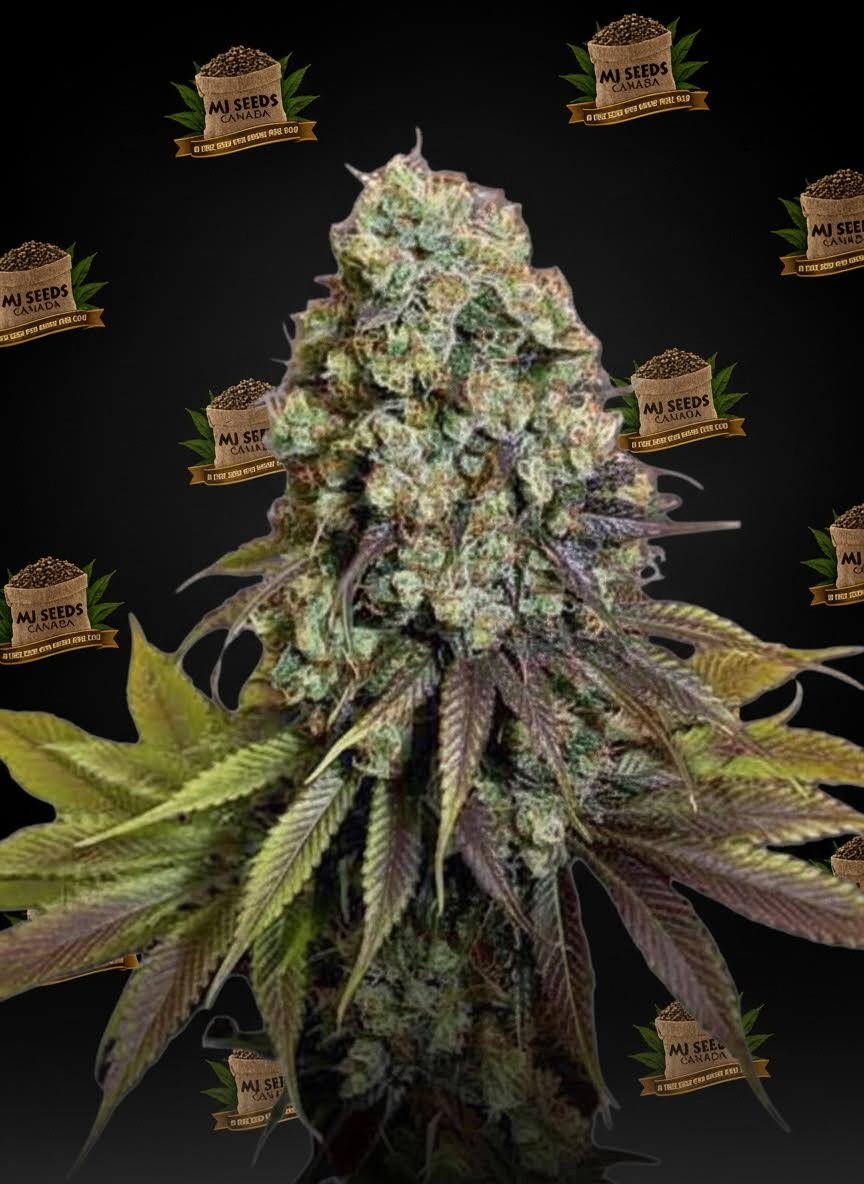
Buds are medium sized, chunky and hard, deep green with blue and violet flashes through the calyxes and thick copper pistils. The trichome heads are the notable part: larger than average and sitting on long, sturdy stalks, which is exactly what a dry sift screen or an ice water wash wants.
This is about as easy as photoperiod growing gets. Veg four weeks, flip at 35 to 45 cm, and the stretch is a mild 1.3 times to a finished 70 to 120 cm, so it fits a short tent with the light at a sane distance. It is a light to moderate feeder and prefers to be underfed rather than pushed; dark, clawed leaf tips in week two of flower mean too much nitrogen. Room temperature of 21 to 26 degrees is fine and it tolerates 55% humidity better than anything else in this batch, though 45% at the end still gives cleaner flower. Flower runs 49 to 63 days depending on the phenotype.
This is the outdoor strain in this batch, and the reason is the calendar. A mid to late September harvest works in coastal BC, southern Ontario, Quebec and the Maritimes without any special handling, and it is one of the few plants we would send to a Prairie grower without qualification: start seeds indoors in April, plant out in late May, and a mid September harvest leaves a comfortable margin ahead of the first hard frost in most years. Because the plant stays under 160 cm and takes damp weather well, it also suits a coastal garden where late August fog would flatten a dense dessert strain. Our outdoor cultivation guide covers the late May transplant in detail.
Very little is needed. A single topping at the fourth node and a bit of leaf thinning gives a wide, even bush, and the branches are thick enough to carry the buds without support. The main job is defoliation: the plant carries a lot of large fan leaves, and opening the middle of the bush in week three of flower improves light to the lower bud sites more than any training will.
Because it finishes early, the temptation is to trust the calendar rather than the plant. Check trichomes from day 46. Mostly cloudy is the peak for the blueberry, and 10% to 15% amber pushes it toward the heavier hash character. Dry 10 to 12 days at 60% humidity; the incense note sharpens in the jar over two to three weeks.
Indoors, 350 to 450 g/m² is the honest number, which is modest by modern standards and the price of a seven week flower on a short plant. Outdoors a full-season plant gives 400 to 500 g dried. The yield that matters with this strain is the resin: growers regularly report dry sift and ice water hash returns above what the dry flower weight suggests, because the heads are big, they release cleanly and the trim is worth as much as the buds. Our yield per plant guide is useful for planning around a smaller frame.
Grow Blueberry Hashplant if your season is short, if your garden is cool or damp, if you make hash or rosin, or if this is a first grow and you want a plant that will not punish an average week.
Pick something else if you want maximum yield per square metre, where Blueberry Muffin gives roughly 50% more weight on the same fruit theme; or if you want a 28% THC strain, because this one is deliberately not that.
Blueberry is the fruit parent: taller, longer in flower by a week or two, sweeter and without the incense. Hash Plant is the other side of the cross, all spice and resin with none of the berry, and worth running beside this one if hash is the goal. Northern Lights is the closest classic for an easy, early, short indica, with a sweeter, more piney profile. Among our indica feminized seeds this is the earliest finisher of the batch, and it belongs in the same conversation as the strains in our fast flowering seeds for Canada guide.
Blueberry Hashplant is strongly indica dominant, around 80% indica and 20% sativa, from Blueberry crossed with an Afghani hashplant line. It is also sold as Hash Berry. The plant is short, wide and bushy, and the effect starts with a light, cheerful lift before turning heavy and physical for a couple of hours.
Blueberry Hashplant tests between 18% and 24% THC with CBD usually under 0.6%. That is moderate by current standards and intentional: the effect is heavy without the racing edge some high twenties hybrids bring.
Yes, and it is one of the few strains we would recommend there without a qualification. Start seeds indoors in April, plant out in late May, and a 7 to 9 week flower brings harvest in mid to late September, ahead of the first hard frost in most years. The short frame also makes it easy to cover on a cold night.
The trichome heads are larger than average and sit on long, sturdy stalks, so they snap off cleanly on a dry sift screen or in an ice water wash instead of smearing. Harvesting at mostly cloudy trichomes and freezing the material fresh keeps the heads intact, and the leaf trim carries enough resin to be worth washing too.
Hash is a volume game: you want several plants, you want the trim, and you want to run the wash once rather than three times. That makes the pack size the decision, and our 10 and 25 seed packs are buy one get one free with any strain of the same size, so a 25 pack of Blueberry Hashplant and 25 of something else arrive for the price of one. Orders over $420 add 10 bonus seeds on top.
Every batch is germination tested in our Vancouver, BC seed bank before it is packed, and each pack is covered by our 80% germination guarantee when you use the cup of water and paper towel method from our germination guide. That guarantee is worth more on a strain you are planting in quantity, because a weak pack costs you a whole season rather than a single plant.
The seeds ship from Vancouver in plain, unbranded packaging and reach every province in 3 to 7 business days, with free shipping over $200 and a $30 tracked and insured option that includes one free reshipment. We have been doing this from the same city since 2009, and Interac e-Transfer, credit card, Bitcoin and cash are all accepted, with support on phone, email, WhatsApp and live chat seven days a week.
| Pack Size | 5 Seeds, 10 Seeds, 25 Seeds |
|---|---|
| Genetics | Blueberry x Hash Plant (Afghani hashplant line) |
| Type | Indica dominant hybrid (80/20) |
| THC | 18%–24% |
| CBD | 0.1%–0.6% |
| Flowering time | 7–9 weeks (49 to 63 days) |
| Outdoor harvest | Mid to late September |
| Height indoor / outdoor | 70–120 cm / up to 160 cm |
| Yield indoor / outdoor | 350–450 g/m² / 400–500 g per plant |
| Difficulty | Easy |
| Climate | Handles cool, damp weather better than most; good mould resistance |
| Best for | Short seasons, hash and dry sift, small spaces, first grows |



Are You 18 Or Over?
By clicking 'Continue', you confirm that you are over 18 years old. By using this website, you agree to our Terms of Service.
Reviews
There are no reviews yet.