
🎁 10 FREE seeds with orders over $420 · Free shipping over $200 · Germination guaranteed
$65.00 – $240.00Price range: $65.00 through $240.00
RS11 strain, short for Rainbow Sherbert #11, is the tropical candy hybrid that made frosted pink buds a benchmark: a Pink Guava and OZK cross testing 22% to 30% THC, with guava, sherbet and a thin line of gas running under the sweetness. The number is a phenotype selection, not a generation count, and the plant it came from is indica dominant at roughly 70/30, finishing in 8 to 9 weeks at 90 to 140 cm indoors. Feminized seeds, viability tested in our Vancouver seed bank, shipped inside Canada in 3 to 7 business days.

| Pack Size | Price | Quantity | |
|---|---|---|---|
| 5 Seeds | $65.00 | ||
| 10 Seeds | $120.00 | ||
| 25 Seeds | $240.00 |
Viability-tested seeds. If they don’t pop following our germination guide, we replace them.
Encrypted SSL checkout. Your card statement shows a neutral company name, never cannabis.
Ships from Vancouver, BC in 3 to 7 days, plain packaging with no cannabis branding.
Live chat 7 days a week, plus growing guides written for Canadian climates.
| Genetics | Pink Guava x OZK |
|---|---|
| Type | Indica dominant hybrid (70/30) |
| THC | 22%–30% |
| CBD | 0.1%–0.5% |
| Flowering time | 8–9 weeks (56 to 63 days) |
| Outdoor harvest | Late September to early October |
| Height indoor / outdoor | 90–140 cm / up to 180 cm |
| Yield indoor / outdoor | 400–500 g/m² / 500–600 g per plant |
| Difficulty | Moderate |
| Climate | Warm and dry; rewards a wide trained canopy |
| Best for | Potency, tropical candy flavour, rosin and resin |
RS11 Feminized at a glance: RS11 is a 70/30 indica dominant hybrid that flowers in 8 to 9 weeks, tests 22% to 30% THC, yields 400 to 500 g/m² from a trained canopy, and tastes of guava, sherbet and citrus candy over a faint gas base, on buds frosted heavily enough to look dusted.
RS11 is one of those strains people search for under three different names and then find only as a clone they cannot get, which usually leads to an overseas seed order and a three week wait with no guarantee anything arrives. Ours are feminized seeds, in stock, in Vancouver. They go out in plain unbranded packaging the day payment clears and reach every province in 3 to 7 business days, tracked and insured for $30 if you want the parcel followed. Each batch is viability tested in our own seed bank before packing and carries the 80% germination guarantee, and every 10 and 25 seed pack comes with a second pack free.
RS11 strain is a cross of Pink Guava and OZK, a pairing that sits in the wider Sunset Sherbert family and was selected in California around 2021. The full name is Rainbow Sherbert #11, and the number is the part people get wrong: it marks the eleventh plant kept from a selection run, not an eleventh generation or an eleventh cross. That is also why RS11 and the older Rainbow Sherbert are related but not the same strain.
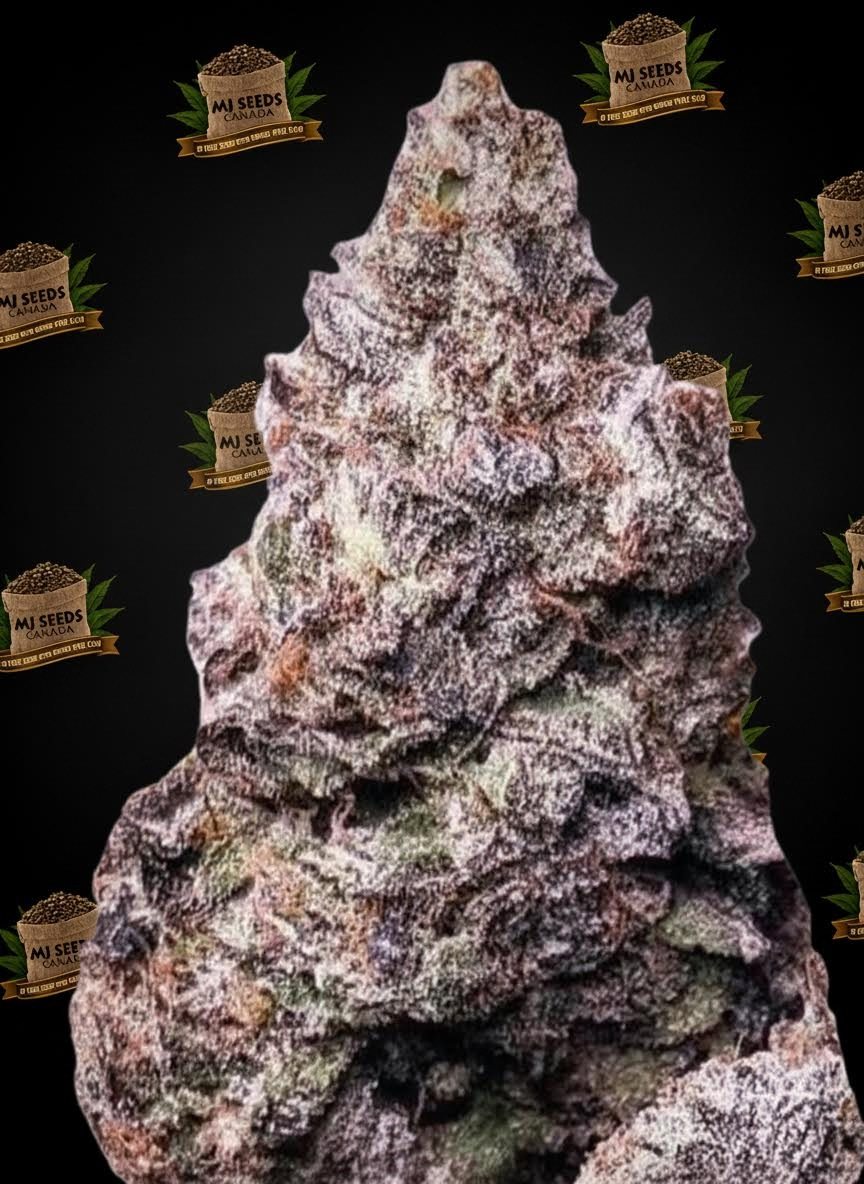
Its reputation was built on appearance and flavour. The buds are pale, dense and so heavily frosted that they look dusted with sugar, and the smell is tropical in a way very few strains manage: guava and sherbet rather than the usual berry or citrus. It leans indica at roughly 70/30, and the plant is medium sized with a habit of putting its best flower on the outer branches.
RS11 is unusual in how it splits. The body goes calm and quite heavy within the first half hour, and the head stays clear. Most people describe sitting still very comfortably while still following a conversation or a film properly, which is not how a 70% indica normally behaves.
The potency range is wide, 22% to 30%, and the upper end is genuinely strong. Because the head stays clear it is easy to underestimate how much the body has taken on, so start small and wait twenty minutes.
The nose is tropical fruit first, guava and a little mango, then a creamy sherbet sweetness, then a bright citrus zest and a thin gassy edge at the back. On the smoke it is candy sweet on the inhale with a spicy, peppery exhale, and the aftertaste is closer to sorbet than to dessert cream. Limonene and myrcene lead the terpene mix with caryophyllene behind them, which is where the pepper comes from.
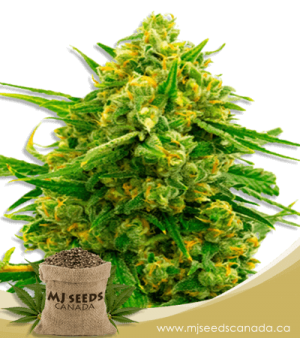
Visually it is one of the most distinctive plants in the catalogue: chunky, rounded buds in pale sage and dusty pink, laced with violet where the nights get cold, and a trichome coat so thick and even that a dried bud reads as grey from a metre away.
Give it a four to five week veg and flip at 45 to 55 cm; the stretch is about 1.6 times to a finished 90 to 140 cm. It feeds moderately and shows calcium deficiency before anything else, so keep Cal-Mag in the mix from the start of flower rather than adding it in a panic at week four. Run 23 to 27 degrees in the day with a five to seven degree night drop in the last three weeks for the pink and violet tones. The buds are dense and the resin makes them slow to dry internally, so 45% humidity from week five and air moving through the canopy are both necessary. Flower runs 56 to 63 days.
The 8 to 9 week flower makes this workable across most of the country, with one condition: it hates a wet finish more than it hates a cold one. Coastal BC and southern Ontario harvest in the last week of September or the first week of October and should keep a cover ready. Quebec and the Maritimes manage it in a sunny, sheltered, well drained spot with a late May transplant. Prairie growers should start indoors in April and plant out in late May for a late September harvest, and the dry Prairie autumn actually suits the dense buds better than a coastal one does.
Training is not optional with RS11 if you care about the number at the end. Left to grow naturally it makes one good central cola and a skirt of thin, underdeveloped branches, and the reported yields of 450 g/m² and up come from growers who topped once, spread the plant flat with low stress training and filled a screen. Our low stress training guide covers the technique; on this plant it is the difference between a moderate harvest and a good one. Add a second net at week three of flower, because the colas get heavy.
The frost arrives early and makes the plant look ready long before it is. Ignore the sparkle and check the trichome heads from day 54: fully cloudy with the first few amber, usually day 58 to 63, keeps the tropical fruit intact, while going further trades the guava for a heavier, gassier smoke. Hang whole branches and dry cool, 16 to 18 degrees for 12 to 14 days, because the resin content makes wet trimming a sticky and wasteful exercise. Three weeks of cure sharpens the citrus and the gas together.
Indoors, a properly trained canopy returns 400 to 500 g/m²; an untrained plant in the same space will give noticeably less, which is the main complaint growers have about this strain and the main thing they can fix. Outdoors a full-season plant gives 500 to 600 g dried. Where RS11 pulls ahead is in extraction: the trichome coverage is exceptional, the heads are uniform, and rosin returns are among the best of any strain in this batch, so the effective yield per plant is higher than the dry flower weight suggests.
Grow RS11 if you want tropical fruit flavour rather than another cookie or gas cross, if you press rosin, or if you like a strain that relaxes the body without clouding the head. It suits a grower on their second or third run who is comfortable filling a screen.
Pick something else if you would rather not train, where Blueberry Hashplant gives a decent harvest with almost no intervention; if your autumn is reliably wet and you garden outdoors; or if you want a heavier, sleepier evening strain.
Rainbow Sherbert is the strain RS11 is most often confused with: related through the Sherbert side, but sweeter, more berry-led and a step down in both potency and resin. Sunset Sherbet sits further back in the family and is the lighter, more balanced ancestor of the whole group. Zoap is the closest sibling we stock, sharing the Pink Guava side and trading the guava for a soapy floral sweetness. Among our indica feminized seeds RS11 is the resin pick, and it sits near the top of our high THC seeds guide.
No. RS11 stands for Rainbow Sherbert #11, which is the eleventh plant kept from a selection run rather than a version of the older Rainbow Sherbert, and its parents are Pink Guava and OZK. The two are related through the Sherbert side of the family but taste and grow differently: RS11 is more tropical, more resinous and stronger.
RS11 is an indica dominant hybrid, roughly 70% indica and 30% sativa. The body effect is heavy and arrives in the first half hour, but the head stays noticeably clear, so it does not behave like a typical heavy indica. The plant is medium sized and needs training to fill a canopy.
RS11 tests between 22% and 30% THC with CBD under 0.5%, and the top phenotypes are as strong as anything we sell. Because the mental side stays clear, the strength is easy to underestimate for the first twenty minutes, so start small. CBD is negligible.
Guava and tropical fruit first, then a creamy sherbet sweetness, citrus zest and a thin gassy edge on the exhale. The dominant terpenes are limonene and myrcene with caryophyllene giving a peppery finish. Harvesting at fully cloudy trichomes keeps the fruit; a later cut trades it for a heavier, gassier smoke.
Strains with a clone-only reputation are the ones people end up ordering from overseas, and a seed parcel crossing a border is the one part of the grow you cannot control. RS11 from MJ Seeds Canada is already here: feminized, in stock in our Vancouver, BC seed bank, and out the door in plain unbranded packaging the day the payment clears. Every province is 3 to 7 business days away, free over $200, with a $30 tracked and insured option that includes one free reshipment.
Seeds also give you something a clone cannot: a few plants to compare. Our 10 and 25 seed packs are buy one get one free with any strain of the same size, so you can run several RS11 and keep the one that fills the screen best. Every batch is viability tested here before packing and covered by the 80% germination guarantee with the method in our germination guide, and orders over $420 include 10 bonus seeds.
We have shipped from Vancouver since 2009. If you are two weeks into flower and unsure whether to add a second net, phone, email, WhatsApp and live chat all reach someone here seven days a week, and you can pay by Interac e-Transfer, credit card, Bitcoin or cash.
| Pack Size | 5 Seeds, 10 Seeds, 25 Seeds |
|---|---|
| Genetics | Pink Guava x OZK |
| Type | Indica dominant hybrid (70/30) |
| THC | 22%–30% |
| CBD | 0.1%–0.5% |
| Flowering time | 8–9 weeks (56 to 63 days) |
| Outdoor harvest | Late September to early October |
| Height indoor / outdoor | 90–140 cm / up to 180 cm |
| Yield indoor / outdoor | 400–500 g/m² / 500–600 g per plant |
| Difficulty | Moderate |
| Climate | Warm and dry; rewards a wide trained canopy |
| Best for | Potency, tropical candy flavour, rosin and resin |

Are You 18 Or Over?
By clicking 'Continue', you confirm that you are over 18 years old. By using this website, you agree to our Terms of Service.
Reviews
There are no reviews yet.