
🎁 10 FREE seeds with orders over $420 · Free shipping over $200 · Germination guaranteed
$65.00 – $240.00Price range: $65.00 through $240.00
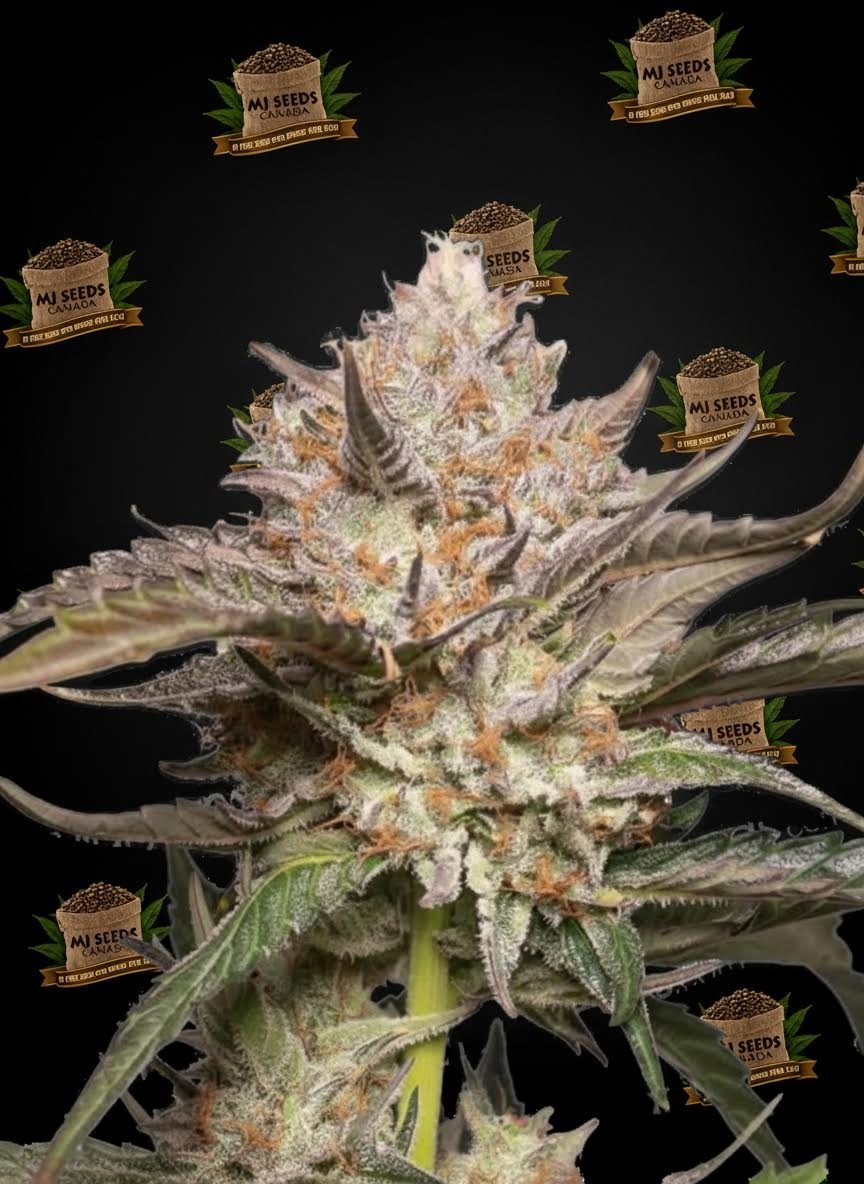
Blue Zushi is the most practical plant in this batch: Zkittlez crossed with Kush Mints, testing 22% to 27% THC, finishing in 8 to 9 weeks at 80 to 130 cm, and shrugging off the damp that ruins denser strains. The flavour is cold mint over blueberry with a floral, spiced base, and the buds run deep green shot through with purple under a blue-grey trichome haze. Feminized, viability tested in our Vancouver seed bank, and on your doorstep anywhere in Canada within 3 to 7 business days.

| Pack Size | Price | Quantity | |
|---|---|---|---|
| 5 Seeds | $65.00 | ||
| 10 Seeds | $120.00 | ||
| 25 Seeds | $240.00 |
Viability-tested seeds. If they don’t pop following our germination guide, we replace them.
Encrypted SSL checkout. Your card statement shows a neutral company name, never cannabis.
Ships from Vancouver, BC in 3 to 7 days, plain packaging with no cannabis branding.
Live chat 7 days a week, plus growing guides written for Canadian climates.
| Genetics | Zkittlez x Kush Mints |
|---|---|
| Type | Indica dominant hybrid (70/30) |
| THC | 22%–27% |
| CBD | 0.1%–0.5% |
| Flowering time | 8–9 weeks (56 to 63 days) |
| Outdoor harvest | Late September to mid October |
| Height indoor / outdoor | 80–130 cm / up to 180 cm |
| Yield indoor / outdoor | 500–650 g/m² / 600–750 g per plant |
| Difficulty | Easy to moderate |
| Climate | Handles damp better than most, still wants airflow in late flower |
| Best for | Wet autumns, small tents, heavy yields, blueberry and mint flavour |
Blue Zushi Feminized at a glance: a 70/30 indica dominant hybrid that flowers in 8 to 9 weeks, tests 22% to 27% THC, yields 500 to 650 g/m² on a compact plant, and combines blueberry and mint flavour with unusually good mould resistance.
More Canadian outdoor crops are lost to a wet fortnight in late September than to cold, and the ones that survive it have open bud structure and good genetics behind them. Blue Zushi is one of the few modern candy hybrids with a real reputation for handling damp, which is why we stock it. The seeds sit in Vancouver, BC and reach anywhere in the country in plain unbranded packaging in 3 to 7 business days, with no customs step in between. Every batch is viability tested here and covered by our 80% germination guarantee, and the 10 and 25 seed packs are buy one get one free.
Blue Zushi is Zkittlez crossed with Kush Mints, part of the Zushi line built around trichome coverage, terpene intensity and how the flower looks in a jar. Pink Zushi and the original are its siblings. The Zkittlez side brings the fruit and the colour, the Kush Mints side the cold menthol note, the density and the stems that keep the plant upright under its own weight.
The blue in the name refers to appearance rather than a Blueberry ancestor. Well finished Blue Zushi runs deep green and purple under a trichome layer that photographs blue-grey, and the blueberry note in the flavour comes from the Zkittlez fruit expression rather than from any Blueberry ancestor. Sources put the indica split anywhere between 60/40 and 70/30, and both describe the same plant.
It opens softly. The first ten minutes bring a floaty, pleasant shift with a bit of mental clarity attached, and many people describe a stretch of quiet focus before anything physical registers. The body comes in as a smooth heaviness from about the half-hour mark and holds for two hours or so. It leans evening, but the early part is clear enough to be useful in the afternoon.
At 22% to 27% THC this is potent, and the smooth delivery hides it well enough to catch people out. Menus sometimes quote 30% or more; a home grown plant lands in the range above.
The inhale is cold mint, immediate and unmistakable, giving way quickly to sweet blueberry and a broader berry sweetness with a citrus edge behind it. The exhale is floral and lightly spiced, a finish that lingers rather than coats. Limonene, caryophyllene and humulene lead most lab panels, though terpinolene shows up strongly in some, which is part of why total terpene content here is so often quoted as high.
The buds are compact and rounded rather than spear shaped, deep forest green with purple and violet running through the calyxes and a heavy, almost silvered trichome coat. Pistils are sparse and rust coloured. It looks dense, but there is enough space between the calyxes to breathe, which is why it copes with humidity better than it appears to.
Blue Zushi is small and productive, a rarer combination than it sounds. Veg four weeks, flip at 40 to 50 cm, and a stretch of about 1.4 times leaves it at 80 to 130 cm, well inside a 150 cm tent. It is a moderate feeder that wants steady calcium and magnesium through flower, and most growers never need to stake it. Run the room at 22 to 26 degrees, drop nights to around 17 degrees from week six for colour, and take it to 56 to 63 days. Humidity is more forgiving here than anywhere else in this batch, but 50% and moving air is still the target.
This is the batch’s outdoor strain. An 8 to 9 week flower and real damp tolerance put BC, southern Ontario, Quebec and the Maritimes all within reach, cutting in the last week of September or the first half of October depending on the season, and the Maritimes in particular benefit from a plant that does not rot at the first sustained rain. Prairie growers should start indoors in early April for a late May transplant and a late September harvest; because the plant stays short, covering it through a frost night or wheeling a fabric pot into a garage is genuinely practical rather than a theoretical option.
Top once at the fourth or fifth node and spread the branches gently. It forms a tight, bushy structure, so the risk is the opposite of most strains: the canopy closes up and shades its own lower bud sites. Remove the interior fan leaves at week three of flower to open lanes for air and light, and do no more than that; a single net at the flip is enough support.
Calyx swell rather than colour is the honest signal, since purple can arrive as early as week six and says nothing about ripeness. Check trichomes from day 56 and cut at mostly cloudy with a few amber, usually day 58 to 63. The mint note is volatile, so dry cool: 16 to 18 degrees for 12 days, then jar at 60% and burp. Two weeks of cure brings the blueberry forward; push to four and the mint sharpens noticeably against it.
This is the strain’s best argument. Indoors, 500 to 650 g/m² from a plant that tops out at 130 cm is a high return per unit of height, and it needs no heavy training to get there. A full-season plant in a 60 litre pot gives 600 to 750 g dried on the coast, and Prairie plants still come in around 400 to 500 g. Combine that with the damp tolerance and Blue Zushi is one of the few strains that performs in a Canadian outdoor garden with no greenhouse behind it.
Grow Blue Zushi feminized seeds if you garden outdoors east of the Rockies and have lost buds to rot before, if your tent is short and you still want real weight, or if you want the Zushi flavour without the fuss boutique genetics usually carry.
Pick something else if you want maximum potency, where Donny Burger is several points higher; if you want a daytime, energetic strain, where Tropicana Cherry is the better call; or if the mint note is not to your taste, since it is the first thing you meet every time.
Kush Mints is the parent that gives it the menthol and the backbone, and it is the direct comparison for anyone deciding between the two: Kush Mints is stronger and more mentally heavy, Blue Zushi is fruitier and easier outdoors. Zkittlez is the other parent and the fruit source. Among our indica dominant feminized seeds Blue Zushi is the practical outdoor choice, and it is one of the first names we would add to our best outdoor seeds for Canada shortlist.
Blue Zushi is an indica dominant hybrid from Zkittlez crossed with Kush Mints. Sources put the split anywhere between 60/40 and 70/30 indica, and both describe it fairly. The opening is clear and a little floaty, and the body relaxation builds from about half an hour in and runs for roughly two hours.
Blue Zushi tests between 22% and 27% THC with CBD under 0.5%. Some retail menus quote 30% or more, but a well grown home plant sits in that lower band. The delivery is smooth enough to disguise the strength, so it is easy to take more than you meant to in the first ten minutes.
Yes, better than most modern candy hybrids. The buds are compact but the calyxes sit with enough space between them for air to move, and the Kush Mints side contributes sturdy stems and thick cell walls. It still needs airflow and a dry finish, but it is a realistic choice for a wet Canadian September where denser strains would be lost.
Indoors it finishes at 80 to 130 cm after a four week veg, with a mild stretch of about 1.4 times, so it fits a 150 cm tent comfortably. Outdoors it reaches up to 180 cm in a full season. The short stature is the reason it is easy to cover on a frost night or move under shelter during a rainy week.
If you have opened a cola in early October and found grey rot in the middle, you know the calculation: the strain matters more than the effort. Blue Zushi is one of the few current hybrids offering weight, flavour and a fighting chance in a damp finish, which is why we stock it in Vancouver, BC. Seeds go out in plain unbranded packaging and arrive anywhere in Canada in 3 to 7 business days, free over $200, or $30 for tracked and insured delivery with one free reshipment if the parcel is lost.
Buying inside the country also means the seeds arrive in time to matter, and an outdoor plant has to be started in April. We have shipped from Vancouver since 2009 with every batch viability tested here, and the 80% germination guarantee applies when you use the cup of water and paper towel method from our germination guide. A 10 or 25 seed pack is buy one get one free with any strain of the same size, which is how outdoor growers cover themselves against a bad spring, and orders over $420 include 10 free seeds.
Interac e-Transfer, credit card, Bitcoin and cash are all accepted, and when the forecast turns and you want a second opinion on cutting early, our Vancouver team answers phone, email, WhatsApp and live chat seven days a week.
| Pack Size | 5 Seeds, 10 Seeds, 25 Seeds |
|---|---|
| Genetics | Zkittlez x Kush Mints |
| Type | Indica dominant hybrid (70/30) |
| THC | 22%–27% |
| CBD | 0.1%–0.5% |
| Flowering time | 8–9 weeks (56 to 63 days) |
| Outdoor harvest | Late September to mid October |
| Height indoor / outdoor | 80–130 cm / up to 180 cm |
| Yield indoor / outdoor | 500–650 g/m² / 600–750 g per plant |
| Difficulty | Easy to moderate |
| Climate | Handles damp better than most, still wants airflow in late flower |
| Best for | Wet autumns, small tents, heavy yields, blueberry and mint flavour |


Are You 18 Or Over?
By clicking 'Continue', you confirm that you are over 18 years old. By using this website, you agree to our Terms of Service.
Reviews
There are no reviews yet.