
🎁 10 FREE seeds with orders over $420 · Free shipping over $200 · Germination guaranteed
$65.00 – $240.00Price range: $65.00 through $240.00
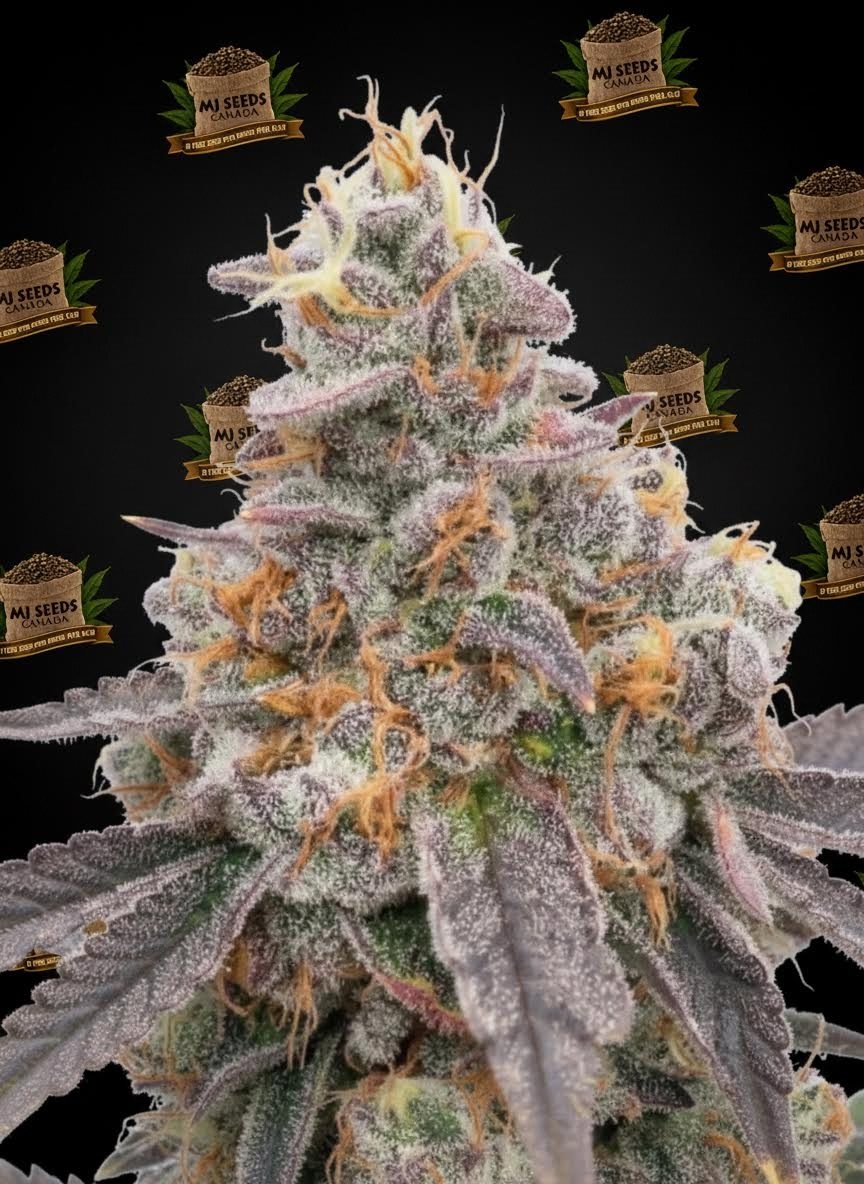
Rainbow Belts is the rare candy strain that tastes the way its name promises: Zkittlez crossed with Moonbow #75, at 20% to 26% THC, finishing in 8 to 9 weeks and turning lavender, violet and rose through the last three weeks in a cool room. It leans indica at roughly 60/40, but the first hour stays clear and sociable rather than pinning you to a chair, which is why growers who want colour and loud terpenes keep coming back. Every seed is feminized, viability tested in Vancouver, and delivered inside Canada in 3 to 7 business days.

| Pack Size | Price | Quantity | |
|---|---|---|---|
| 5 Seeds | $65.00 | ||
| 10 Seeds | $120.00 | ||
| 25 Seeds | $240.00 |
Viability-tested seeds. If they don’t pop following our germination guide, we replace them.
Encrypted SSL checkout. Your card statement shows a neutral company name, never cannabis.
Ships from Vancouver, BC in 3 to 7 days, plain packaging with no cannabis branding.
Live chat 7 days a week, plus growing guides written for Canadian climates.
| Genetics | Zkittlez x Moonbow #75 |
|---|---|
| Type | Indica leaning hybrid (60/40) |
| THC | 20%–26% |
| CBD | 0.1%–0.6% |
| Flowering time | 8–9 weeks (56 to 63 days) |
| Outdoor harvest | Late September to early October |
| Height indoor / outdoor | 90–150 cm / up to 180 cm |
| Yield indoor / outdoor | 450–550 g/m² / 500–700 g per plant |
| Difficulty | Moderate |
| Climate | Cool nights in the final three weeks for colour, steady airflow through the canopy |
| Best for | Colour, candy terpenes, an evening that does not end early |
Rainbow Belts Feminized at a glance: an indica leaning 60/40 hybrid that flowers in 8 to 9 weeks, tests 20% to 26% THC, and gives 450 to 550 g/m² of dense lavender and violet buds carrying a sour citrus and berry candy profile built on limonene.
Rainbow Belts turns up on dispensary menus long before it turns up in seed catalogues, and the overseas packs that do exist can sit in a customs bin for weeks. Ours never leave the country: they are held in our Vancouver, BC seed bank, go out in plain unbranded packaging once payment clears, and land in Ontario, Quebec, the Prairies and the Atlantic provinces within 3 to 7 business days. Every batch is viability tested here before it is packed and backed by our 80% germination guarantee, and both the 10 and 25 seed packs come buy one get one free.
Rainbow Belts is Zkittlez crossed with Moonbow #75, and the Moonbow half matters more than most listings let on. Moonbow is itself Zkittlez crossed with Do-Si-Dos, which makes this plant Zkittlez on both sides with a heavy Cookies and OG backbone underneath. That doubling is why the candy flavour comes through louder than in a straight Zkittlez, and why the buds are denser and far more resinous.
The name refers to the sour rainbow belt candy sold in strips, and it is unusually honest: a cured jar smells like sour sugar shaken over fruit, and the plant looks the part too, running lavender, violet and rose through the calyxes as it ripens. It came out of the American candy-terpene scene in the late 2010s and is still treated there as a reference point for that whole flavour category.
The opening is bright and clear. Five to ten minutes in there is a light head change and a lift in mood, talkative rather than racy, and it holds that way for most of an hour. The indica side arrives gradually as a loosening in the shoulders and legs and settles into something calm and unhurried instead of flattening you, so most people are still cooking dinner or holding a conversation two hours in.
At 20% to 26% THC the spread between phenotypes is wide enough to matter, so treat the first bowl from a new plant as a test rather than a session and give it fifteen minutes before deciding.
Limonene leads, and it reads as sour candy citrus rather than clean lemon: lime peel, orange, a little mango. Under that sits berry sweetness from Zkittlez and a doughy, nutty base from Do-Si-Dos, with a faint fizzy gas note on the exhale that keeps it from tasting like dessert syrup. Caryophyllene and linalool fill in the pepper and the floral edge.
Visually this is one of the best looking plants we stock. Buds are medium sized and hard, with broad calyxes that stack into a fat spear shape, and the colour comes in layers: green at week five, lavender at week seven, deep violet in the last ten days, all under a trichome coat thick enough to grey the surface.
Veg four weeks from seed and flip at 45 to 55 cm; a moderate 1.6 times stretch puts the finished plant at 90 to 150 cm. It feeds at a middling rate and is more sensitive to overfeeding than underfeeding, so start at three quarters strength in a room held at 22 to 26 degrees. The one deliberate move worth making is dropping night temperature to 16 or 17 degrees from week six, because the violet is temperature driven and a warm tent will give you a green plant with the same terpenes and half the appeal.
An 8 to 9 week flower puts Rainbow Belts within reach almost everywhere in the country. On the BC coast and in southern Ontario, transplant in late May and expect to cut in the last week of September or the first days of October, right as the nights get cold enough to finish the colour. Quebec and the Maritimes work on the same schedule with a sheltered, south-facing spot. Prairie growers should start indoors in early April so the plant has size by the late May transplant, and usually cut in the final days of September ahead of the first hard frost. The buds stack tight, so a wet September deserves a rain cover over the last fortnight.
Top at the fifth node and spread the branches with low stress training rather than a heavy screen, which turns a handful of dominant colas and a lot of mid-sized side bud into ten or twelve colas worth trimming. Strip the bottom quarter at the flip and leave the rest of the canopy alone.
The colour change starts around day 45 and tempts an early cut, because a violet plant looks ready long before it is. Ignore the colour and look at the heads: check from day 56, and take it when they are mostly cloudy with the first amber showing, usually day 58 to 63. Dry slowly at 17 to 18 degrees for 12 to 14 days, then jar at 60% and burp daily for a week; the sour candy note only arrives properly after two to three weeks of cure.
Indoors a trained canopy gives 450 to 550 g/m², and the density means the dry weight holds up better than the wet weight suggests. A full-season outdoor plant in a 60 litre pot on the coast will bring in 500 to 700 g dried, and a Prairie plant with the shorter window still returns 350 to 450 g. It is not the biggest producer in the catalogue, but the resin load means a run aimed at hash or rosin returns more per gram than the numbers imply.
Grow Rainbow Belts seeds if colour and terpene intensity are what you actually care about, if you want an evening strain that leaves the first hour usable, or if you garden outdoors where late-September nights get cold. It suits a second or third run more than a first, because the reward comes from small decisions about temperature and timing.
Pick something else if you want maximum weight per square metre, where Blue Zushi is the heavier producer in the same flavour neighbourhood; if you need a plant that shrugs off a damp autumn; or if you want something genuinely sedating for the end of the night.
Zkittlez is the parent on both sides and shows what got concentrated here: the same fruit, less density, less resin and a lighter effect. Do-Si-Dos sits one generation back through Moonbow and explains the weight and the dough note. Candy Runtz is the closest thing to it in the new batch, sweeter and less sour, with a more even 50/50 effect. Among our hybrid feminized seeds Rainbow Belts is the colour pick, and it belongs in the same conversation as the strains in our best outdoor seeds for Canada guide for its late September finish.
Rainbow Belts is an indica leaning hybrid, usually put at about 60% indica and 40% sativa, from Zkittlez crossed with Moonbow #75. Some phenotypes read closer to even. In practice the first hour is clear and sociable and the body relaxation builds slowly after that, so it works in the evening without ending the night.
Rainbow Belts tests between 20% and 26% THC with CBD under 0.6%, which puts it in the strong but not extreme bracket. The spread between phenotypes is real, so a plant from the top of that range will feel noticeably heavier than one from the bottom. Try a small amount from each plant before deciding which to keep.
Sour candy citrus first, closer to lime and orange peel than clean lemon, then berry sweetness and a doughy, nutty base, with a faint fizzy gas note on the exhale. Limonene is the dominant terpene, with caryophyllene and linalool behind it. The sour edge only shows up properly after two to three weeks of cure.
The violet and lavender colour is genetic but temperature triggered. Pigments in the calyxes express when night temperatures drop into the mid teens during the last three weeks of flower, which happens naturally in a Canadian late September and has to be created deliberately in a tent. A warm room gives you a green plant with the same flavour.
Flavour-driven strains appear and disappear from retail shelves on no schedule at all, and the phenotype you liked last month is rarely the one in the jar this month. Growing from seed puts that choice back in your hands: pop several and keep the one whose nose you want. MJ Seeds Canada ships Rainbow Belts from Vancouver, BC in plain unbranded packaging, anywhere in the country in 3 to 7 business days, free over $200, or $30 for tracked and insured delivery with one free reshipment if a parcel goes missing.
We have run this seed bank from Vancouver since 2009, and nothing is listed until a batch has been viability tested here. Start the seeds the way our germination guide describes, in a cup of water and then a damp paper towel, and the pack is covered by our 80% germination guarantee. The 10 and 25 seed packs are buy one get one free with any strain of the same size, which is the cheapest way to run a phenotype hunt, and orders over $420 add 10 free seeds.
Interac e-Transfer, credit card, Bitcoin and cash are all accepted, and if you are three weeks out and unsure whether to chase colour or protect terpenes, our Vancouver team is on phone, email, WhatsApp and live chat seven days a week.
| Pack Size | 5 Seeds, 10 Seeds, 25 Seeds |
|---|---|
| Genetics | Zkittlez x Moonbow #75 |
| Type | Indica leaning hybrid (60/40) |
| THC | 20%–26% |
| CBD | 0.1%–0.6% |
| Flowering time | 8–9 weeks (56 to 63 days) |
| Outdoor harvest | Late September to early October |
| Height indoor / outdoor | 90–150 cm / up to 180 cm |
| Yield indoor / outdoor | 450–550 g/m² / 500–700 g per plant |
| Difficulty | Moderate |
| Climate | Cool nights in the final three weeks for colour, steady airflow through the canopy |
| Best for | Colour, candy terpenes, an evening that does not end early |





Are You 18 Or Over?
By clicking 'Continue', you confirm that you are over 18 years old. By using this website, you agree to our Terms of Service.
Reviews
There are no reviews yet.